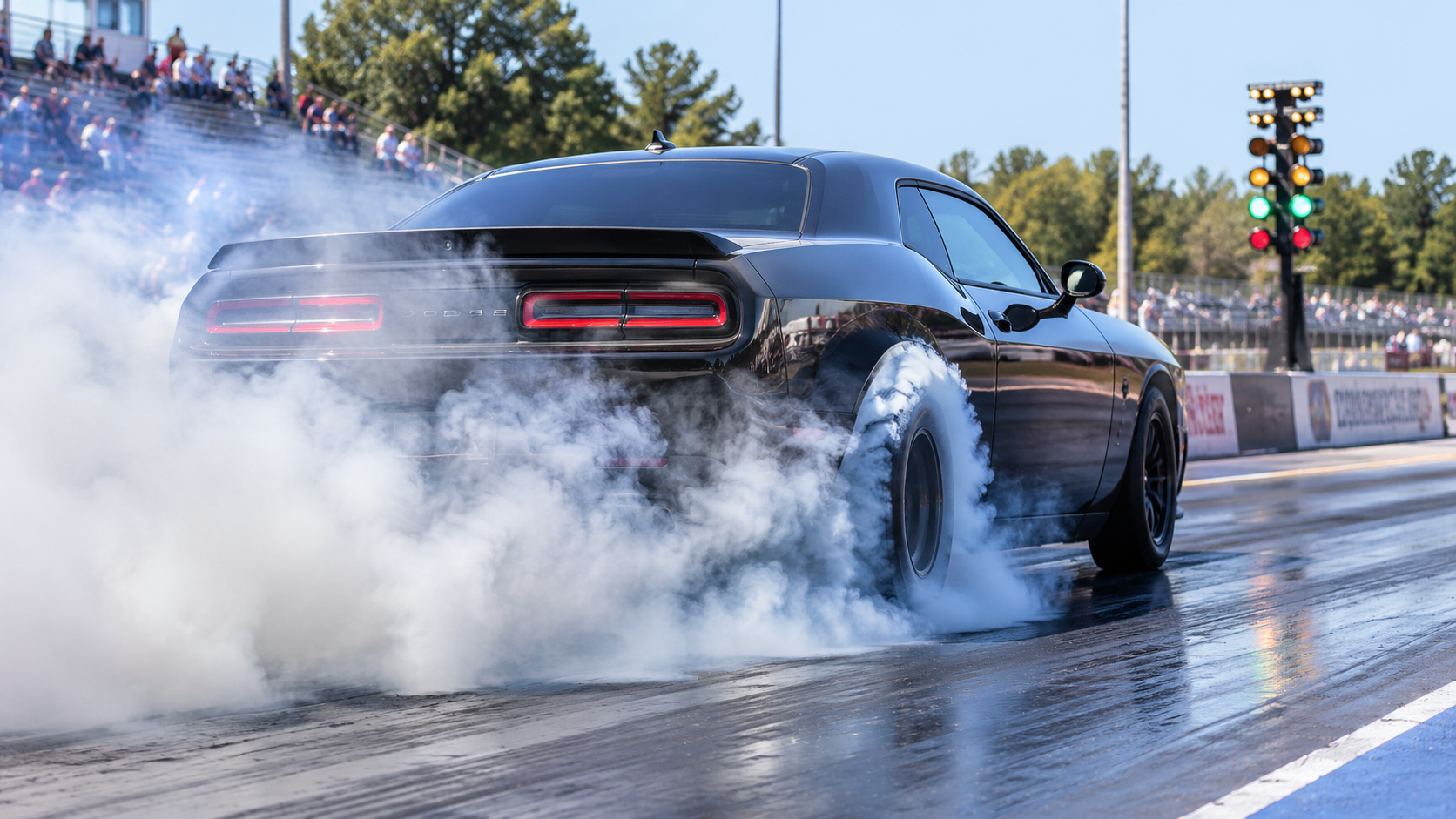
If you’ve ever watched a drag race, you’ve probably seen it. A car pulls out of the staging lanes, rolls towards the starting line, stops for a moment, and suddenly the rear tires start spinning. Smoke fills the air, engines roar, and the crowd gets a little louder.
It’s one of the most exciting parts of a drag racing event. But there’s more to it than simply making smoke for the spectators.
Welcome to the burnout box.
The burnout box is a designated area of the drag strip where drivers prepare their tires before making a pass down the track. It’s an important part of drag racing, and understanding what happens there makes watching a race even more interesting.
So, why do drivers do burnouts? What’s the water for? And why do some cars create enormous clouds of smoke while others barely spin their tires?
Let’s take a closer look.
What Exactly Is a Burnout Box?
The burnout box, sometimes called the water box, is an area located just before the starting line at a drag strip.
It’s where drivers perform a tire burnout before approaching the staging beams. The area is usually treated with water to help the rear tires spin more easily during the burnout.
The purpose isn’t just entertainment. A proper burnout helps prepare the tires for the launch by cleaning the tire surface and, depending on the type of tire, bringing it up to its ideal operating temperature.
You’ll see everything from street cars and muscle cars to purpose-built drag cars and professional race machines using this area.
And yes, some drivers definitely know how to put on a show while they’re at it!
Why Do Drag Racers Do Burnouts?
The main reason is traction.
In drag racing, getting maximum grip when the starting lights turn green is extremely important. A car can have hundreds or even thousands of horsepower, but all that power means very little if the tires simply spin instead of pushing the car forward.
Burnouts help prepare the tires for the launch in several ways.
1. Cleaning the tires
Tires can pick up dust, dirt, rubber debris and other contaminants while travelling through the pits and staging lanes. A burnout helps clean the contact surface.
2. Heating the tires
Drag racing tires, particularly racing slicks and specialized drag radials, often perform better within a certain temperature range. A controlled burnout helps bring the tire surface up to operating temperature.
3. Preparing for maximum traction
A properly prepared tire can provide better grip when the driver launches the car. This is especially important for high-powered drag cars, where putting the power down without spinning the tires can be a serious challenge.
However, not every car needs a big smoky burnout. Street tires and different types of racing tires have different requirements. Some tires need very little preparation, while others benefit from a carefully controlled burnout.
Why Is There Water in the Burnout Box?
This is something many first-time drag racing spectators wonder about.
The water is there to help the tires spin during the burnout.
When a driver enters the burnout box, they may drive through the water before spinning the rear tires. The water helps reduce initial grip, allowing the tires to break traction and spin more easily.
As the tires continue spinning, the water is displaced and the tire surface heats up.
It’s important to understand that the water isn’t there to make the track slippery for the actual race. Drivers are preparing their tires in a designated area before moving towards the starting line.
Track crews also need to make sure water doesn’t get carried onto the racing surface, where it could create a dangerous situation.
How Does a Driver Perform a Burnout?
Although it looks simple from the spectator area, there’s a little more to it than pressing the accelerator and hoping for the best.
A typical rear-wheel-drive drag car follows a process something like this:
- The driver approaches the burnout box and positions the car in the designated area.
- The rear tires pass through the water, if required for that particular tire and track procedure.
- The driver spins the rear tires while keeping the car under control.
- The tires clean off and build up heat as the burnout continues.
- Once the burnout is complete, the driver stops spinning the tires and moves towards the staging area.
Some cars use a device called a line lock. This allows the driver to hold the front brakes while releasing the rear brakes, making it easier to spin the rear tires without the car moving forward.
You’ll often see this on street-and-strip cars and modified performance vehicles.
Professional drag cars have their own specific procedures, and not every vehicle performs a burnout in exactly the same way.
Why Do Some Burnouts Produce More Smoke Than Others?
Not all burnouts are created equal.
The amount of smoke depends on several things, including tire compound, tire temperature, vehicle power, tire size and how long the driver performs the burnout.
Soft racing tires can produce impressive smoke when heated. Some purpose-built drag cars can create enormous clouds that practically disappear into, especially when the car has plenty of horsepower.
You’ll also notice that different types of cars behave differently.
A relatively standard street car might produce a short burst of smoke, while a powerful Pro Mod or other dedicated drag machine can turn the burnout box into a full-blown smoke show.
And that’s usually when the cameras come out!
Does Every Drag Car Need a Burnout?
No.
The type of tire and the racing category determine how much preparation is required.
Some street cars may only need a quick spin to clean the tires. Racing slicks and certain drag radials can require a more carefully controlled burnout to achieve the right operating temperature.
There are also racing classes and vehicles where a traditional burnout isn’t necessary or isn’t part of the procedure.
Longer doesn’t automatically mean better, either. Excessive burnouts can overheat tires, waste valuable rubber and potentially damage equipment.
Experienced drivers know that the goal is to prepare the tires, not simply produce the biggest cloud of smoke.
The Burnout Box: More Than Just Smoke and Noise
For many spectators, the burnout is almost as entertaining as the actual race.
It’s where you get to hear engines working hard, see tires disappear behind clouds of smoke and watch drivers prepare for the few seconds that matter most.
But behind all that noise and excitement is a very practical purpose. The burnout box is an important part of preparing a drag car for a successful pass.
The next time you’re at a drag strip, pay attention to what happens before the cars reach the starting line. You’ll have a much better understanding of why drivers spend time in the burnout box and what they’re trying to achieve.
And if you’re anything like us, you’ll probably still be waiting for that one car that decides to put on an unforgettable smoke show!
Love watching burnouts?
We’ve put together a collection of some of the best burnout action from the drag strip. From smoky street cars to serious horsepower machines, there’s plenty of tire-shredding action to enjoy.